SiL Retrofit: Enhanced and Secure Monitoring for Gas Pressure Reduction Stations
Discover how Alps Group modernized the supervisory system and replaced the interface PLCs at the Gas Pressure Reduction and Metering Stations (PDCs) operated by the Lausanne Industrial Services (SiL).

Context
SiL operates a 753-kilometre gas distribution network spanning more than 40 municipalities. Of these, 38 are supplied directly at retail level, four at wholesale level, and one (Lutry) through a partnership.
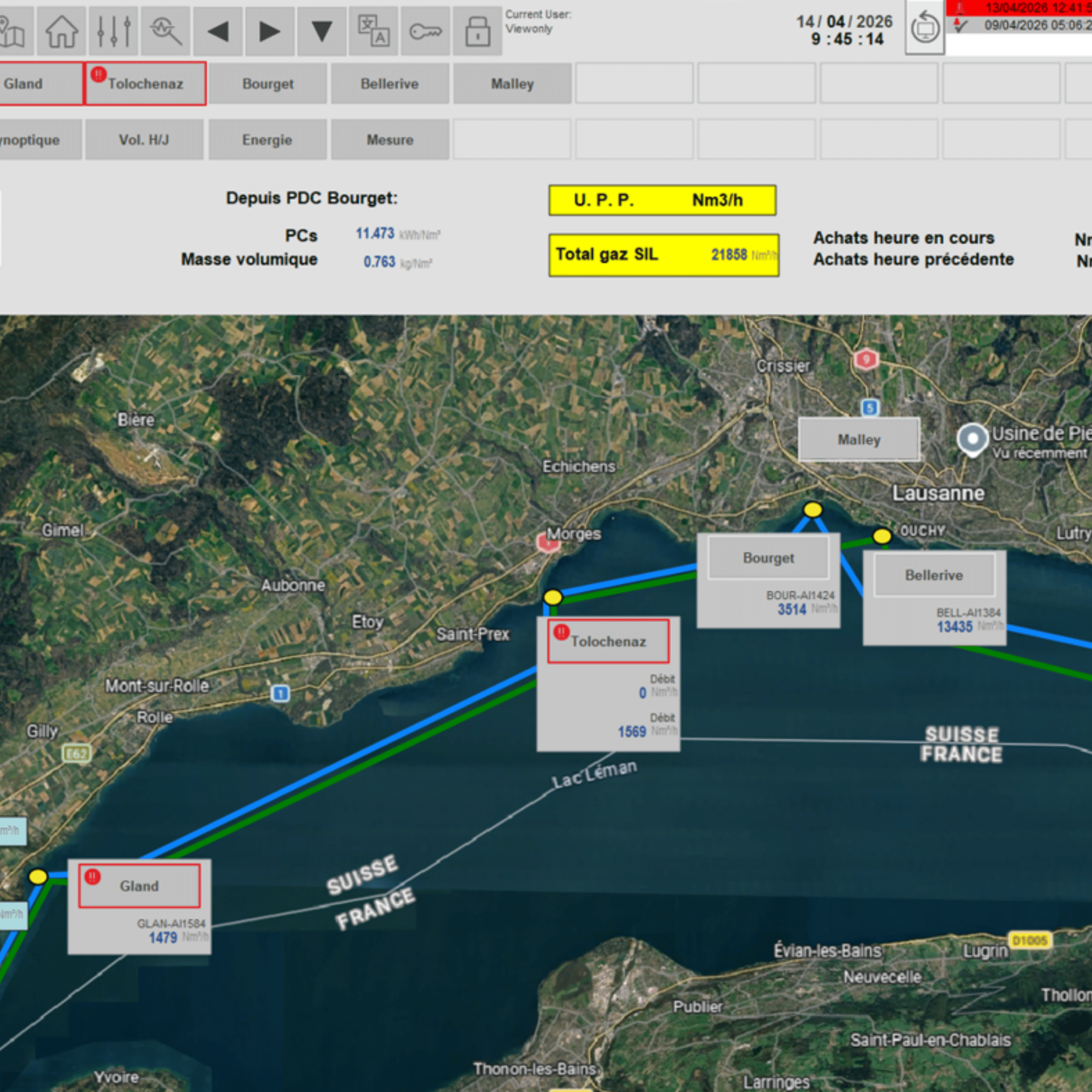
Located along the shores of Lake Geneva, the network extends from Lutry to Nyon. It is supplied through four gas injection points, known as Pressure Reduction and Metering Stations (PDCs), located in Lausanne (Bellerive and Bourget), Tolochenaz and Gland. These facilities are owned by the City of Lausanne and operated by its partner, Gaznat SA. They are monitored 24 hours a day, 7 days a week.
The stations reduce the gas pressure from approximately 48 bar, as supplied, to 4.8 bar, allowing it to be fed into the distribution network. They are the network’s only gas delivery points, supplying nearly 16,000 customers. In addition to reducing the pressure, they measure the volume of gas delivered.
The supervisory system must provide operators with real-time information on the status of the installations and pressure levels throughout the entire network. It must also enable remote control of the various injection points to ensure the reliability and stability of the network. Supervision plays a critical role in network operations, and any malfunction detected at one of the PDCs must be reported immediately.
It is therefore essential to have accurate, real-time, remote visibility of the operating status of each PDC.
Interface PLC Retrofit and SCADA Modernization Using the SiL Standard HMI
Each PDC is controlled by an independent system operated by Gaznat. Process data is transmitted via an Allen-Bradley PLC, using either a hardwired connection or Modbus communication with the Gaznat PLC. The supervisory system retrieves data from the PLCs through their network, enabling real-time display and monitoring. The new SiL HMI standard is used throughout the system.
The project aims to improve visibility and understanding of the network’s operating status, enabling operators to receive alarms in the event of a failure and facilitating informed decision-making. Obsolete equipment has been replaced, and the electrical schematics have been completely redesigned, ensuring the long-term reliability and maintainability of the installation.

Deliverables
Site surveys were carried out at the various facilities to identify the replacement equipment required and assess discrepancies between the actual installations and the existing electrical schematics.
In parallel, a functional analysis was conducted to identify the functions and data available in the PLCs and define the required interfaces.
The SiL library was used to standardize the installations and ensure consistency across the different sites.
The PLC programs (CompactLogix) and HMI application (FactoryTalk View V15, based on standard PlantPAx faceplates) were developed in close collaboration between ALPS and SiL, ensuring the delivery of a solution that met the requirements and expectations of all stakeholders.
Each PDC was commissioned sequentially.
The project enabled SiL to improve service continuity and quality, reduce on-site interventions and associated operational costs, while also enhancing the safety of the installations.
We would like to thank the Alps Group team members for their commitment and dedication throughout this project.